
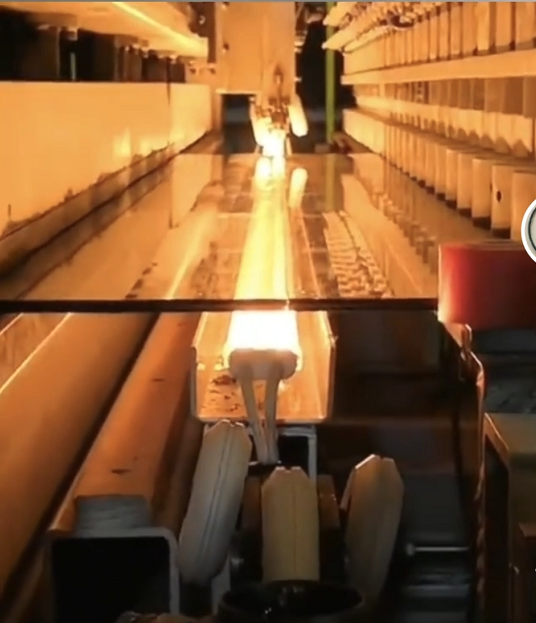
On the line, the Hydrophobic coating only performs as well as the drying step behind it. Underheat, and you’re staring down haze, weak adhesion, and the inevitable callback. Overheat, and you’re courting thermal stress fractures—especially on tempered or coated lites. The furnace can’t rescue uneven drying. Get the first pass right in the dryer, or you’re already behind. What actually matters, technically We build the hydrophobic coating dryer around short-wave NIR emitters, tuned so energy dumps into the coating fast without cooking the glass bulk. The module keeps power density under control, with spectral output matched to the coating’s absorption profile. That gives you a surface-first cure that relies less on convection and trims cycle time. Repeatability is the point: uniformity across the glass width comes from an engineered emitter layout and closed-loop temperature control. We size the unit to your line speed and your glass thickness range, with voltage and footprint options that slot into existing coaters and laminators. Why it holds up in real glass processing Throughput and yield don’t negotiate. This dryer moves the cure window earlier, so the coater stops being the bottleneck. Tempered parts leave the line with the coating set—no tack—so handling marks and rejects drop. Lamination prep gets more predictable, because the hydrophobic layer is fully cured before the autoclave cycle. Energy use falls, too: NIR heats the coating, not the air. Maintenance intervals stretch out, since the emitters are tough and the housing is built for dust, steam, and solvents. A few shop-floor realities NIR drying is line-of-sight, so glass geometry and spacing directly impact uniformity. For thick or heavily textured glass, we tweak emitter power and dwell time, and we recommend a short run-in to lock the profile. The dryer works with most coater brands, but mounting and interface details must be confirmed—voltage, connectors, and control signals vary by OEM. Plan for clean power and adequate cooling; stable input keeps emitter output steady and keeps the coating from overshooting.